How to evaluate mineral processing companies — and a shortlist you can actually use
Most lists of mineral processing companies are either directory spam or thinly disguised sales pages. This one gives you an evaluation framework first, then real companies — international and Chinese — with honest notes on where each fits. One of them is us, and we've marked that entry so you can be as sceptical of it as of the rest.
Discuss your project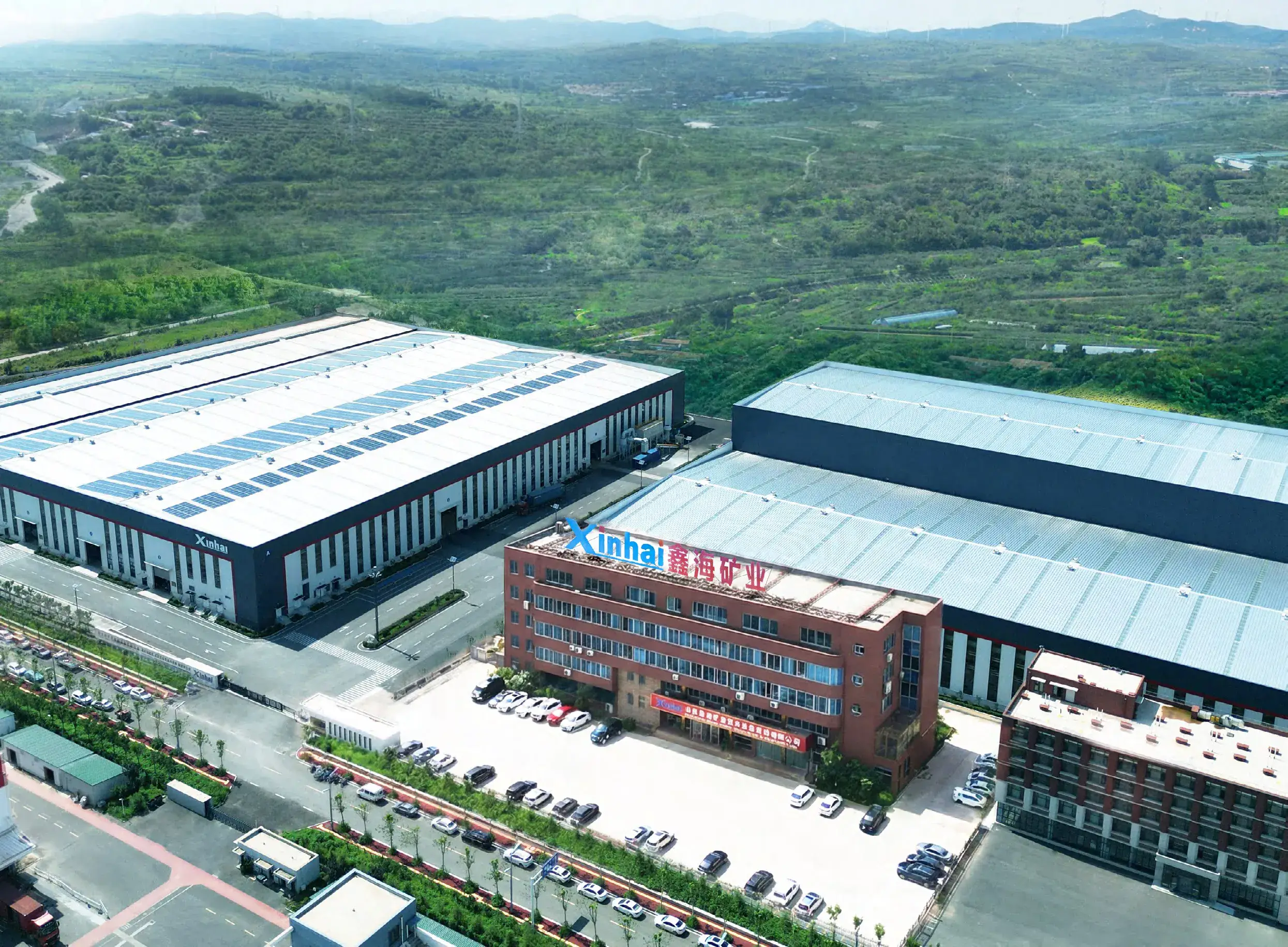
Overview
Search for mineral processing companies and you'll land on two useless extremes: directories that list dozens of firms with no way to tell them apart, and vendor pages explaining why their own equipment answers a question you haven't finished asking. This page tries to be more practical. It gives you an evaluation framework — the five things that actually separate one supplier from another — and then a working shortlist of real companies, international and Chinese, with plain notes on where each one fits.
Full disclosure before we start: one of the companies below is us. Xinhai Mining runs this site. We've written our own entry with the same discipline we applied to everyone else's, and we'd encourage you to read it with the same scepticism.
Decide what kind of company you need first
The phrase covers at least four different businesses. Equipment manufacturers build crushers, mills, flotation cells and the wear parts around them. Engineering firms produce testwork programmes, flowsheets and plant designs, but fabricate nothing. EPC and EPCM contractors take single-point responsibility for delivering a working plant. Operators run that plant after handover, sometimes for years. Some groups do one of these well. A few do several. Almost nobody does all of them at every scale, whatever the brochure says.
Your project stage decides which type you should be talking to. If you're holding drill core and a resource estimate, you need a laboratory and a process engineer, not a construction contractor. If you have a completed study and financing, you need someone who can hold a schedule and manage interfaces. If your plant is built and underperforming, the conversation is about operations, audit and commissioning discipline. Getting the category wrong wastes months.
Five checks that separate suppliers
1. Testwork capability
Ask whether the company owns its laboratory or subcontracts the work. Ownership isn't automatically better, but it changes incentives: a firm that runs its own bench and pilot programmes has to live with the flowsheet its data supports. Accreditation frameworks such as ISO/IEC 17025 tell you the lab's procedures are externally audited. Pilot capacity matters when bench results won't answer the scale-up question on their own. Our guide to metallurgical testwork walks through what a serious programme looks like, stage by stage.
2. Design credentials
Look for the engineering disciplines under one roof — process, civil, structural, electrical, automation, tailings — and ask how they coordinate, because most plant problems live at the interfaces between disciplines. If your project will be reported under JORC or NI 43-101, ask who on the design side has worked inside those frameworks. One caution that applies across borders: design and construction licences are national. A qualification registered in China, or anywhere else, doesn't transfer to your jurisdiction by itself, so ask how the company handles local engineering sign-off where you operate.
3. Manufacturing depth
Some firms make their own equipment; others integrate machines bought from third parties. Both models can work. What you want to know is who actually fabricates the mills, tanks and structures, who makes the wear parts you'll be buying for the next decade, and what inspection records travel with each item. A factory visit answers more of this than any datasheet. Our equipment and manufacturing page sets out how we answer those questions for our own scope.
4. Construction and operating record
Reference projects mean little until the scope is labelled. Designed, built and operated are three different claims, not one. A company that designed a concentrator someone else erected has real but narrower experience than one that carried the job through commissioning into production. Ask for references sorted by scope, then call the owners. Our project record is organised this way deliberately, and where a project is recorded only at the level of country, mineral and capacity in our project brochures, we say so rather than inventing detail.
5. Jurisdiction experience
A supplier who has delivered in your part of the world has already paid the tuition on logistics, port handling, power quality, labour rules and local standards — CE marking obligations in Europe being one example. Tailings governance is jurisdiction-specific too, and it's increasingly the part regulators scrutinise hardest; our Tanzania graphite TSF design work shows what a scoped tailings engagement looks like. Ask every candidate for the nearest reference to your site, in geography and in mineral.
International groups worth knowing
Metso (Espoo, Finland) supplies equipment and services across aggregates, minerals processing and metals refining, positioning itself around end-to-end technology plus a global service network. For large concentrators it's often on the shortlist for comminution and flotation packages, backed by deep consumables and service coverage. You'd engage Metso as a technology and equipment partner rather than a turnkey mine builder.
FLSmidth (Copenhagen, Denmark) describes itself as a full-flowsheet minerals processing supplier to the global mining industry, with roots in cement technology and a services business that follows the life of the plant. Its pitch is breadth: one vendor across the flowsheet from crushing to filtration. As with any full-flowsheet claim, ask which parts of the sheet are its own technology and which are integrated.
Weir (Glasgow, United Kingdom) is best known in mining for slurry transport: slurry pumps and the valves that control slurry flow around the plant. You'd meet Weir as an equipment partner inside someone else's flowsheet, not as an EPC contractor — and for moving slurry from one stage to the next, that focus is exactly the appeal.
Chinese companies on the same map, including us
CITIC Heavy Industries (CITIC HIC, Luoyang) grew out of a state heavy-machinery plant and is best known for very large grinding mills, crushers and mine hoists supplied to major concentrators worldwide. It sits closest to the heavy-equipment end of the spectrum: you'd shortlist it for big comminution hardware rather than for plant operations.
JXSC (Ganzhou, Jiangxi) serves the small and mid-scale end of the market with crushing, gravity separation, flotation and gold-washing equipment, alongside mineral processing test services and process design. If you're building a pilot plant or a compact operation, its catalogue is sized for that conversation.
FTM / Fote Machinery (Zhengzhou, Henan) is a volume manufacturer of crushers, grinding mills and ore beneficiation lines with a wide export footprint. Its strength is standardised, catalogue equipment produced at volume; process engineering depth is something to probe against your specific ore rather than assume.
Xinhai Mining (Shandong Xinhai Mining Group, founded in 1997, Yantai) is the group behind this site. It works across the whole chain this article describes: mineral testwork in a CNAS-accredited laboratory with an industrial-scale pilot base, mine and plant design, equipment manufacturing, construction under a Class-A mine-construction contracting qualification held within the group in China, and contract operations — the EPC+M+O model. Xinhai reports more than 2,500 mines served and more than 600 mine EPC+M+O projects; those figures come from the company's own published materials, so treat them the way you'd treat any firm's self-reported numbers — ask for scope-labelled references and check the ones nearest your region. More background is on our about page.
Running the actual comparison
Once you have three to five candidates, the process is unglamorous. Request reference lists with scope labelled per project, and phone at least one owner per candidate. Visit the factory if manufacturing depth matters to your package. Put your own ore through their laboratory before you commit to anything larger — a modest testwork contract is one of the cheapest auditions you can run on an engineering organisation, and it shows you how they handle data that doesn't fit their preferred flowsheet.
Then write the contract boundary before you write the contract. Decide what the company will own, what you will own, and where hand-offs happen, because the gap between two scopes is where projects leak money. If you want to test that conversation on us, send your mineral, country, capacity and project stage and we'll tell you plainly whether the work fits our scope — and if it doesn't, we'll say that too.