Commissioning a mineral processing plant: what each stage has to prove
Commissioning is where a plant stops being a construction project and starts being an operation. This is the stage chain we follow on EPC work, what each step verifies, and why first-year recovery so often trails the design report.
Discuss your project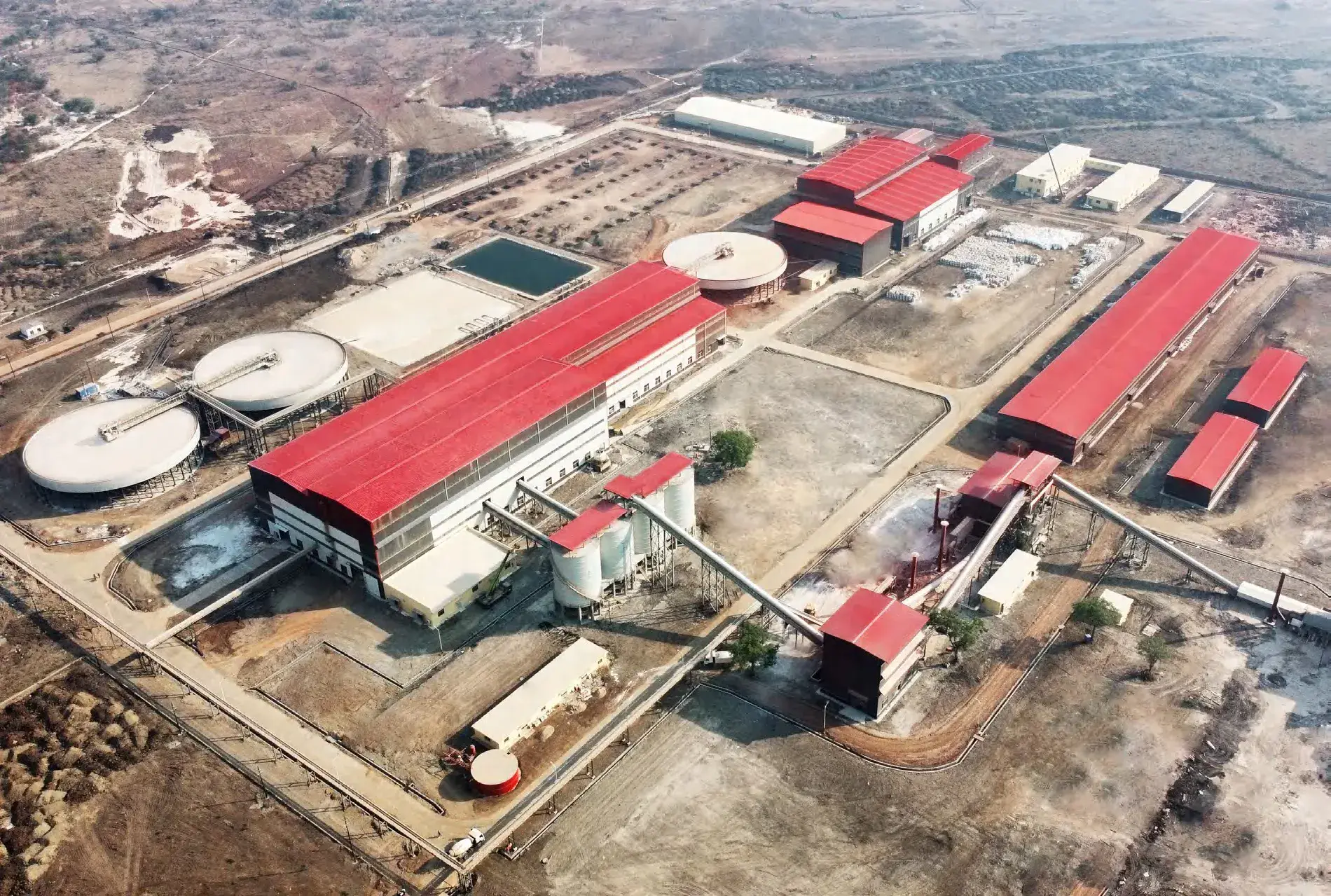
Overview
Every flowsheet decision, every equipment selection and every construction shortcut gets its bill presented here — in the weeks when the plant first runs on ore.
This page walks through the commissioning chain we use on EPC projects, what each stage is supposed to prove, why the recovery you achieve in the first year usually sits below the number in the design report, and the three things an owner's team should watch while the commissioning engineers do their work.
The commissioning chain: five stages, each with a gate
On our projects commissioning follows a fixed sequence. Each stage has to close out before the next begins, because every stage assumes the one before it already caught its own class of problems. Skipping ahead doesn't save time; it just moves the discovery of an installation fault to a moment when the plant is full of slurry.
1. Single-machine trials
Every drive runs alone, unloaded. The team checks rotation direction, vibration, bearing temperatures, lubrication, seals, alignment, guarding and local stop buttons. This is where crossed wiring, missing shims and transposed pump internals get found. None of these faults are exotic, and all of them are cheap to fix now and expensive to fix under load.
2. Interlocked no-load runs
The full line runs empty as a system. Start-up and shutdown sequencing is exercised in the correct order, interlocks are tripped deliberately, conveyors are tracked and trained, and every instrument has to report a sensible signal to the control room. This gate answers one thing — whether the plant behaves as a single machine, and whether an emergency stop actually stops it.
3. Water commissioning
Pumps, tanks, launders and slurry lines run on water. Leaks show themselves, level and density instrument loops get their first live tuning, gland water and spillage routes are proven, and measured pump performance is compared with what the hydraulic design assumed. The plant's water balance — fresh water in, process water recirculated, losses out — gets its first honest test here, long before ore complicates the picture.
4. Ore commissioning
Feed is introduced and ramped up in steps. The grinding circuit hunts for stable operation, cyclones are adjusted toward the target cut, reagents enter the circuit for the first time, and the plant produces its first concentrate. This is the stage where the flowsheet finally meets the orebody, and where the difference between a testwork composite and run-of-mine feed becomes visible on the assay sheets.
5. Performance testing
A sustained run against criteria the contract already defined: throughput, availability, concentrate grade and recovery, all reconciled through a metallurgical balance. The performance test is a gate, not a ceremony — it only means something if the sampling points, assay methods and calculation basis were agreed before the test started, and if the records behind it can survive scrutiny from both sides.
Why design recovery and first-year recovery rarely match
Owners are often surprised when the plant passes its performance test and then spends its early operating life producing below the recovery figure in the feasibility study. So why does the gap appear at all?
- The feed isn't the composite. Testwork runs on blended samples. Real mining starts somewhere specific — often in weathered or transition material near surface — and works toward the ore the composite represented. Early feed can be softer, more oxidized and harder to float than the sample the reagent scheme was developed on. Our page on metallurgical testwork covers why sample representativeness sets the ceiling on everything downstream.
- The reagent regime needs site tuning. Laboratory water is not site water. Dosing points, conditioning times and actual consumption all shift when the circuit runs continuously, and finding the stable operating window takes deliberate, recorded trial work.
- People and equipment are both new. Operators are learning the plant's behaviour while mill liners, screen panels and pump internals bed in. Instrument calibrations drift and get corrected. Each of these effects is small; together they are the ramp-up curve.
This pattern is well documented outside our own archive. The ramp-up curve classification developed by metallurgist Terry McNulty, drawn from surveyed plant case histories, groups projects by how quickly they approach design capacity — and the projects on the fastest curves are consistently the ones that completed thorough pilot work on representative samples and kept technical support in place through commissioning and ramp-up. The slowest curves belong to plants that skipped those steps. Flowsheet decisions made long before construction, covered in our guide to flowsheet development, are already shaping which curve your plant will follow.
The gap can close, and our project brochures record what that looks like. At a 2 Mt/a spodumene operation in Zimbabwe where Xinhai holds the operating contract, lithium recovery moved from 59.5% to 69% during contract operation, with concentrate grade held at 5.5% or better and mill throughput running 7.6% above design capacity. That improvement didn't come from one clever fix; it came from steady work on feed control, reagent discipline and circuit stability — the same three levers available to you during commissioning.
Three things owners should watch during commissioning
You don't need to shadow every loop check. You do need visibility on three things, because they decide whether the performance test means anything and how fast ramp-up goes afterward.
Feed stability
An unstable feed makes every downstream reading uninterpretable. Watch how the mine delivers ore to the ROM pad, how blending is managed, and whether the weightometer records show a steady rate or a sawtooth. If the commissioning team can't hold feed steady, insist on solving that first — recovery tuning on a swinging feed is wasted effort, and the plant record it produces will mislead everyone who reads it later.
The reagent regime
Ask for the dosing sheet: which reagent, which addition point, what rate, measured how. Compare actual consumption against the design basis and ask for the reasoning behind every change. Dosages from testwork are starting points, and you should expect them to move — what you're checking is discipline in how they move. Changes made one at a time, justified by an observed response, logged with conditions attached. A scheme that drifts on habit is how plants end up overdosing collector for years without anyone remembering why.
Data records
Shift logs, sample times, assay turnaround, and a metallurgical balance from the first day of ore commissioning. If it wasn't recorded, it didn't happen — and you'll feel that most sharply during the performance test, when both parties need an agreed dataset instead of competing recollections. The commissioning dataset also becomes the baseline your operations team is judged against for the rest of the plant's life, so it's worth insisting on a sampling and reconciliation routine someone actually signs off each day.
Where commissioning sits in an EPC+M+O scope
In the Mine EPC+M+O structure, commissioning belongs to the C stage — construction, installation and commissioning delivered as one scope. That placement matters. The team that installed the equipment answers for whether it runs, and there's no handover seam between the crew that aligned the mill and the crew that has to prove it grinds.
Xinhai runs testwork, design and commissioning within one technical group, so the engineers tuning a circuit on site can trace a decision back to the test data that produced it. Xinhai reports more than 600 Mine EPC+M+O projects in its published figures; the pace that connected structure can support is best shown by the Zimbabwe spodumene project, which moved from contract signing to production in 364 days. We don't quote that number as a promise for your project — schedules depend on site, scope and logistics — but it shows what a single accountable chain from engineering through operations can do when the interfaces don't leak. A schedule like that also leaves no room to repeat a stage, which is exactly why the gated chain exists.
Details of scope boundaries, handover conditions and training obligations belong in the contract, and our project record shows how those scopes have been structured across different minerals and countries.
Preparing for your own startup
If your plant is heading toward commissioning, three preparations pay for themselves: agree the performance test basis early, staff an owner's team that will stay after the contractor leaves, and set up the data habits before first ore arrives, while they're still cheap to establish. If you're earlier in the cycle — testwork, design, or construction planning — the choices you make now decide how rough this stage will be.
Tell us where your project stands and what's already fixed: mineral, capacity, stage, and any test or design reports you hold. Talk to the project team and we'll tell you what the commissioning path looks like from there — including the parts that are harder than they sound.
Still at the design stage? See how plant design and manufacturing under one EPC contract keeps flowsheet, equipment and commissioning with one accountable team.