Kazakhstan copper flotation test: three numbers a design can stand on
A metallurgical test programme for a copper plant planned at 1.5 million tonnes a year in Kazakhstan. Under closed-circuit conditions, the ore returned a concentrate at 16.23 percent Cu, 66.23 percent recovery and 3.50 percent yield. This page explains what those numbers answered — and why they're test results, not production promises.
Discuss your project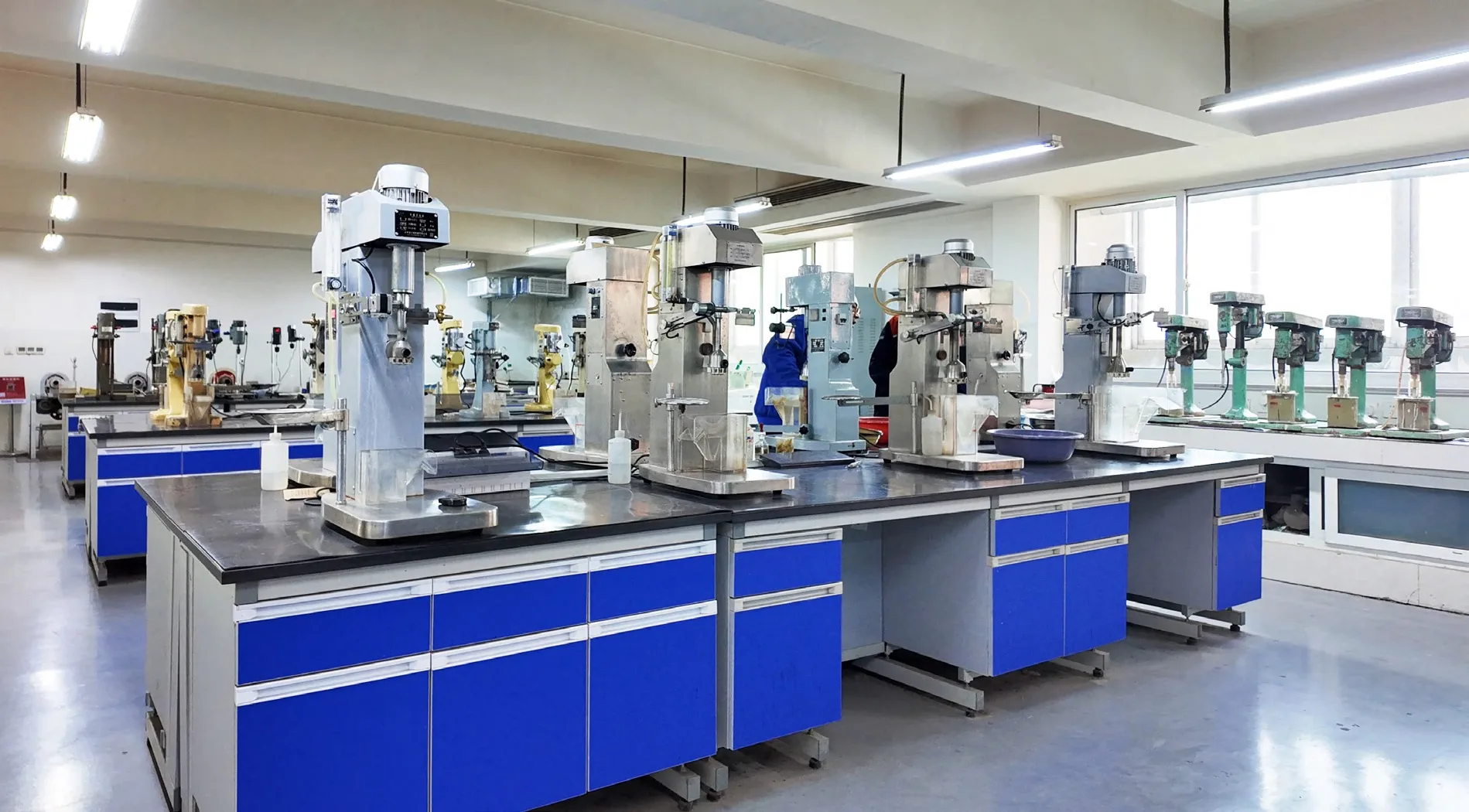
Project at a glance
Figures and scope as recorded in the Xinhai project brochures.
- Location — Kazakhstan
- Mineral — Copper
- Programme scale — 1.5 Mt/a
- Scope — Metallurgical test programme
- Closed-circuit result — Concentrate at 16.23% Cu, 66.23% recovery, 3.50% yield
- Grind — 50% passing 200 mesh
What the programme was asked to decide
If you're carrying a copper project toward design at this scale, three questions sit between you and a flowsheet: how fine the ore needs to be ground before the copper minerals separate from the rock around them; how many flotation stages the circuit needs, and in what arrangement, to pull that copper into a saleable concentrate before it escapes to tailings; and what grade and recovery the ore actually delivers once the circuit runs the way a real plant runs.
None of those questions can be answered from a desk, and a concentrator at 1.5 million tonnes a year is an expensive place to go looking for the answers later. That's the whole argument for testwork: the ore gets its say before the steel is ordered. The programme here settled all three questions on the sample provided, and the settled values — grind, circuit, grade-recovery-yield — are exactly the ones a design team carries forward into flowsheet development.
Why only the closed-circuit numbers count
Flotation testwork runs in two modes, and the difference between them decides which numbers you're allowed to believe.
In an open-circuit test, products move forward only. Middlings — particles too rich to discard, too poor to sell — exit the test wherever they happen to fall. That's useful early on, because it shows the contribution of each stage plainly. But no operating plant works that way.
In a closed-circuit test, the middlings recirculate: cleaner tailings flow back toward roughing, scavenger concentrate returns for another pass, and the circuit is run until grade and recovery stop drifting and settle at steady state. That recirculating load changes the answer. Middlings dilute the feed, load the cells and drag the numbers away from what an open-circuit test suggested. A plant lives with that load every hour it operates, so a design basis built without it is built on the wrong ore.
Reserve reporting standards take the same view of test evidence. The JORC Code, 2012 Edition asks reporters to address the nature, amount and representativeness of metallurgical test work behind stated recovery factors — and it is closed-circuit testwork that gives those recovery factors a defensible basis. The 16.23 percent Cu, 66.23 percent recovery and 3.50 percent yield recorded here are closed-circuit values. They're the ones that count. For the full stage chain from exploratory bench work to pilot plant, see our guide to metallurgical testwork.
How to read one rougher, two scavengers, three cleaners
The circuit shorthand compresses a lot of engineering into six words, so here's the long version.
- One roughing stage. The first pass at the freshly ground pulp. Its job is speed: pull as much copper-bearing mineral as possible into a rough concentrate and let later stages worry about the grade.
- Two scavenging stages. Roughing always misses something. Scavengers work the rougher tailings twice more before that stream leaves as final tailings, because copper that escapes here is gone for good.
- Three cleaning stages. The rough concentrate is upgraded three times over, with each cleaner rejecting more of the entrained gangue, until the concentrate reaches its final grade — 16.23 percent Cu in this programme.
Stage counts like these come out of the test programme itself. Open-circuit tests reveal how many cleaning passes the ore demands, and the closed-circuit run then confirms the arrangement holds once middlings recirculate. Three cleaning stages is the ore telling you its rough concentrate needed real upgrading work — that's information, and it flows straight into cell counts and layout.
The grind condition reads the same way. Fifty percent passing 200 mesh means half the mass of the ground ore is fine enough to pass a 200-mesh test sieve. Grind is the first lever in any flotation programme: too coarse and the copper minerals stay locked inside barren rock; too fine and you've spent grinding power you didn't need while making slimes that float badly. The programme fixed this ore's workable point at 50 percent passing 200 mesh — and that single condition sizes the grinding circuit, which is usually the largest power consumer in the plant.
What 3.50, 16.23 and 66.23 fix downstream
Read together, the three concentrate numbers close the mass balance around the whole plant. Yield says that a small fraction — 3.50 percent — of every tonne fed leaves as concentrate, which scales the cleaner circuit, concentrate thickening, filtration and handling. Everything that isn't concentrate reports to tailings, which scales the tailings storage facility the site will need for its whole operating life. Recovery says roughly two-thirds of the copper in the feed reports to the concentrate under these conditions, which is the number any economic model has to carry. And because yield, concentrate grade and recovery are linked by the standard mass balance, the three values together pin down the feed assay the test was run at — the balance doesn't leave room for a fourth independent number.
That's why a designer treats this triple as a package. Change the grind, and all three move. That's also the yardstick commissioning teams reconcile against once the real plant runs: not a wish, but a recorded, repeatable test result.
Kazakhstan copper, and where Xinhai stands
The setting isn't incidental. The USGS Mineral Commodity Summaries 2026 lists Kazakhstan among the world's significant copper-mining countries, with an estimated 710,000 metric tons of contained copper mined in the most recent year the publication covers. Xinhai operates an overseas branch in Kazakhstan alongside its branches in Australia and Ghana, so test programmes for the region connect to a local presence.
The testwork itself runs through Xinhai's CNAS-accredited laboratory, operating to ISO/IEC 17025, backed by an industrial-scale pilot test base. The company's research brochure records approximately 200 test studies a year, and Xinhai reports experience across more than 70 ore types — this copper programme sits inside that archive alongside phosphate, spodumene and tailings-retreatment campaigns. You can compare it with other work on our projects page.
If you're holding a copper sample and a capacity target, the path is the same one this programme walked: send the mineral, the country, the expected capacity, the project stage and whatever assays already exist, and let the test programme settle what opinion can't. Talk to the test team.