Kyrgyzstan gold: 4,000 t/d through carbon-in-pulp
Our project brochures record a 4,000 t/d gold carbon-in-pulp plant in Kyrgyzstan — country, metal, scale and process route, nothing more. This page unpacks what those four facts imply: how CIP works at this size, and what delivering a plant in Central Asia asks of an engineering team.
Discuss your project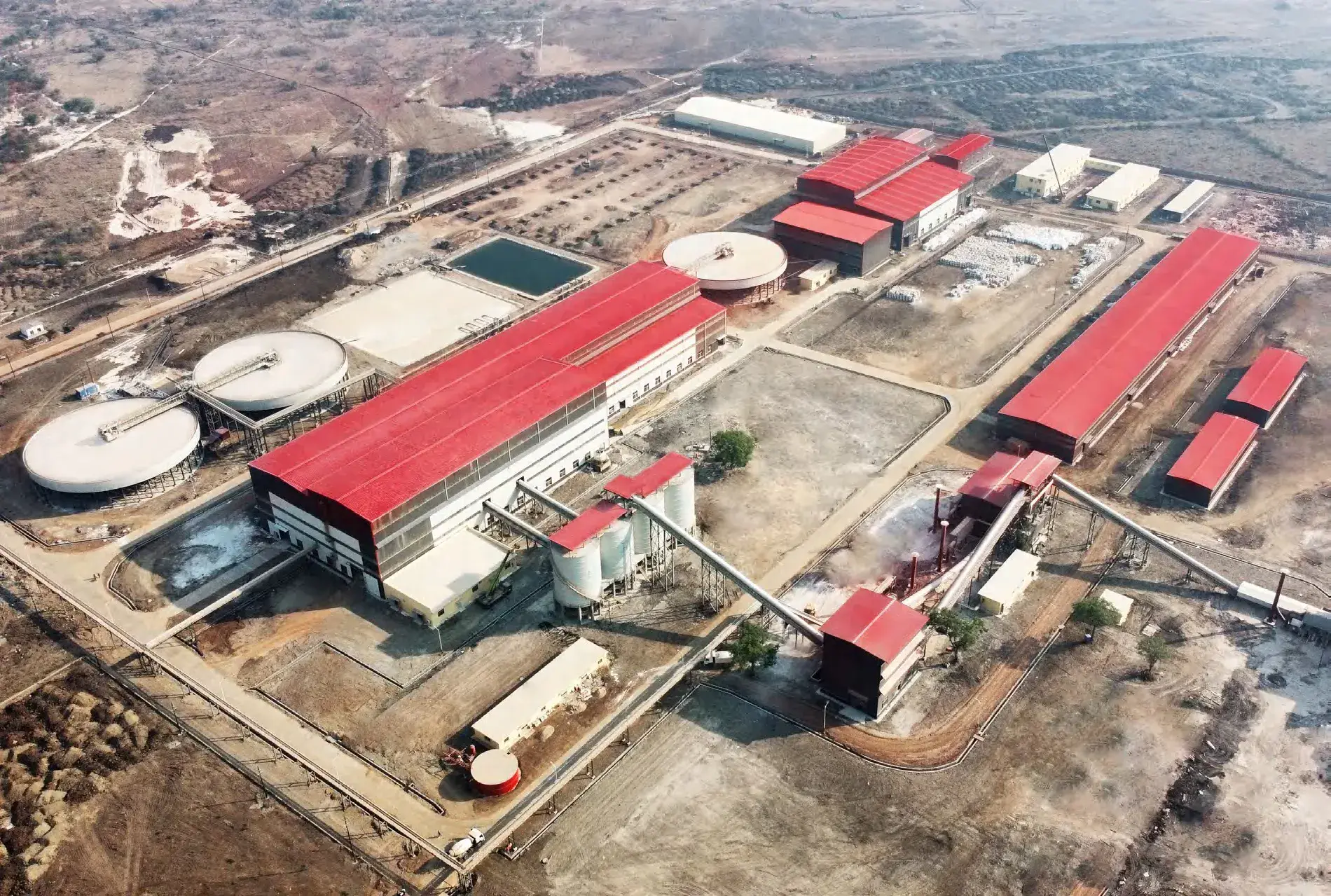
Project at a glance
Figures and scope as recorded in the Xinhai project brochures.
- Location — Kyrgyzstan
- Mineral — Gold
- Scale — 4,000 t/d
- Process route — Carbon-in-pulp (CIP)
- Scope — As recorded in the Xinhai project brochures
What carbon-in-pulp means, and how it differs from CIL
CIP and its close relative CIL recover gold the same basic way: cyanide leaching dissolves the gold into solution, then activated carbon adsorbs it out of the pulp. The difference is where the carbon sits. In carbon-in-leach, carbon is added to the leaching tanks themselves, so dissolution and adsorption happen in the same vessels at the same time. Carbon-in-pulp keeps them apart. The pulp first works through a train of agitated leach tanks with no carbon present, and only then enters a separate adsorption train, where carbon moving counter-current to the pulp collects the dissolved gold.
That separation is the point. Leach chemistry — cyanide dosing, aeration, retention time — gets managed on its own terms, and the carbon circuit runs as its own system: screens holding carbon in each stage, carbon advancing toward the fresh feed, loaded carbon drawn off for desorption. Xinhai's published process description for its gold CIP line breaks the route into seven steps, from leaching-pulp preparation through cyanide leaching and carbon adsorption to desorption, electrowinning of the pregnant solution and acid regeneration of the carbon. The same description names the feeds the route suits: flotation gold concentrates along with gravity and amalgamation tailings on one hand, and mudded oxidized ores on the other.
None of this makes CIP better than CIL in the abstract. Which route fits depends on the ore — its leach kinetics, its clay content, whether anything in it competes with carbon for dissolved gold — and that's a question laboratory evidence answers, not a brochure. Our guide to metallurgical testwork covers how that evidence gets built before anyone commits to steel.
What 4,000 t/d asks of the plant
A CIP circuit at this scale is a substantial industrial facility. Ahead of the leach train sits a full comminution front end — crushing, grinding, classification — because leaching only works on ore ground fine enough to expose the gold. The leach and adsorption sections themselves are rows of large agitated tanks, each with its own agitator and air supply, and in the adsorption train, interstage screens that keep carbon in one tank while pulp flows on to the next. Around all of that: an elution plant, electrowinning cells, a regeneration kiln, a smelting room, reagent mixing, water circuits and tailings handling. Cyanide management runs through every one of those systems, which is why this route carries safety and environmental obligations that never come off the critical path.
On the manufacturing side, this project sits comfortably inside Xinhai's published envelope. The company's documentation records leaching tanks fabricated up to φ20 m × 20 m, ball mills up to φ7 m in diameter and thickeners up to φ100 m, with support for single projects up to 50,000 t/d. A 4,000 t/d gold plant doesn't push any of those limits; it lands in the range where the equipment set is established product rather than one-off engineering. You can see how the wider manufacturing programme is organised on our equipment page.
Delivering a plant in Central Asia
Kyrgyzstan is landlocked and mountainous, and both facts shape how a plant gets built there. Every tank shell, mill section and steel package arrives overland through neighbouring rail corridors and mountain road passes, so packaging, transport dimensions and border sequencing become engineering decisions rather than freight afterthoughts. The continental climate matters too. Winters are cold enough that civil works and concrete pours have to respect seasonal windows, and water, pulp and reagent lines need freeze protection designed in from the start. These are qualitative statements about the region, not claims about this specific site — the brochure record doesn't describe the site, so neither will we.
What can be said about the setting is that mining is an established part of the Kyrgyz economy. USGS Minerals Yearbook coverage of the country describes gold as the primary mineral mined there by value, so a gold plant enters a jurisdiction where the commodity, its regulation and its workforce are familiar ground. Per the company's own documentation, Xinhai maintains an overseas branch in neighbouring Kazakhstan — the same region where its copper flotation test programme was carried out — which means Central Asia isn't a market the company reaches from Yantai alone.
How to read a record like this one
Xinhai reports more than 600 mine EPC+M+O projects across more than 100 countries and regions, according to its published figures. Only a fraction of any contractor's register comes with performance data documented deeply enough to publish; the rest are entries like this one — a country, a commodity, a scale, a route. That doesn't make them worthless. It makes them evidence of range: where the company has shipped, which processes it has engineered, and at what sizes.
If you're weighing Xinhai for a gold project of your own, the useful questions follow directly from this page: what the test work says about leach kinetics and carbon fouling for your ore, whether CIP or CIL fits it better and why, and how the tank count and carbon inventory would shift at your throughput. Those answers come out of a flowsheet developed against evidence, stage by stage. Browse the rest of our project pages — several carry verified performance figures where our records support them — or send us your ore data and start the conversation where every sound gold plant starts: with the ore.